I have a small, specific annoyance. Every time I copy a link to share it, from a newsletter, a social post, an Amazon page, it comes with a tail of tracking gunk stuck on the end. You know the type:
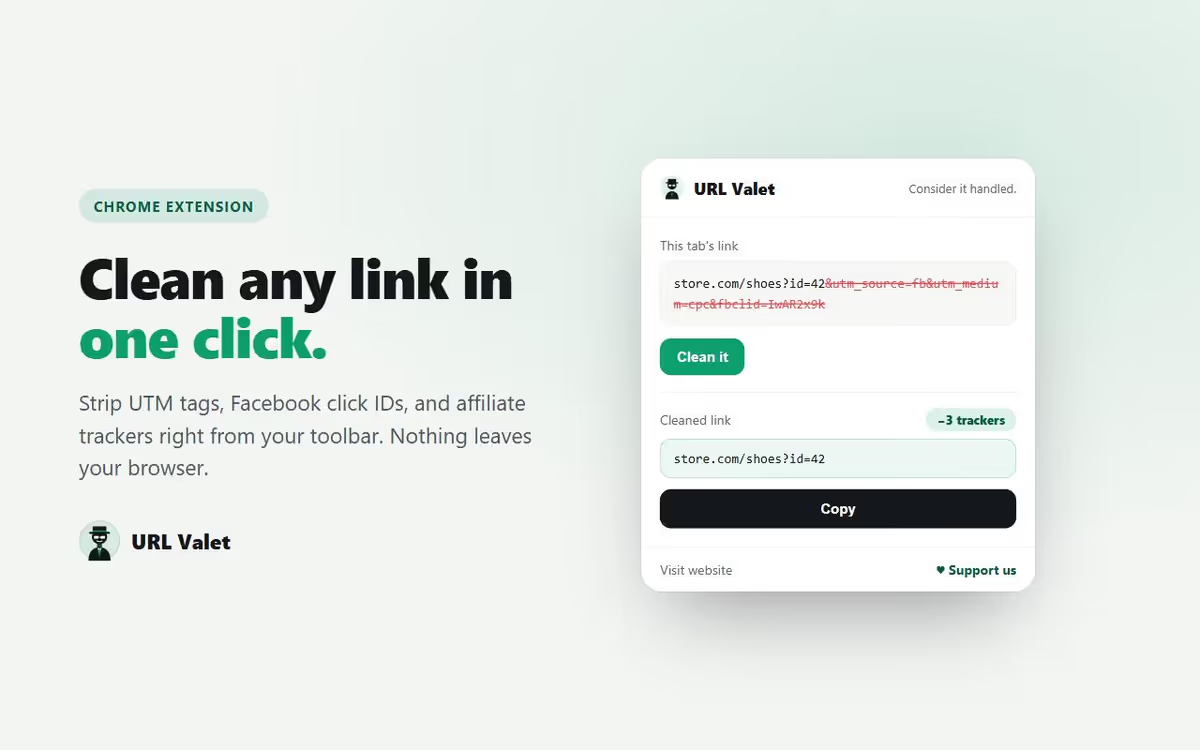
store.com/shoes?id=42&utm_source=fb&utm_medium=cpc&fbclid=IwAR2x9k...Most of that tail is tracking parameters telling various companies where I came from and what I clicked. It makes the link ugly, and when I forward it, I'm quietly passing that tracking on to whoever clicks next.
So I built a tool to clean it. It's called URL Valet, it's live, and the whole thing, a web app and a Chrome extension, went from a written brief to a deployed product in a single day. This post is about the tool, who it's for, and how the build actually went using Ship Studio.
What URL Valet does
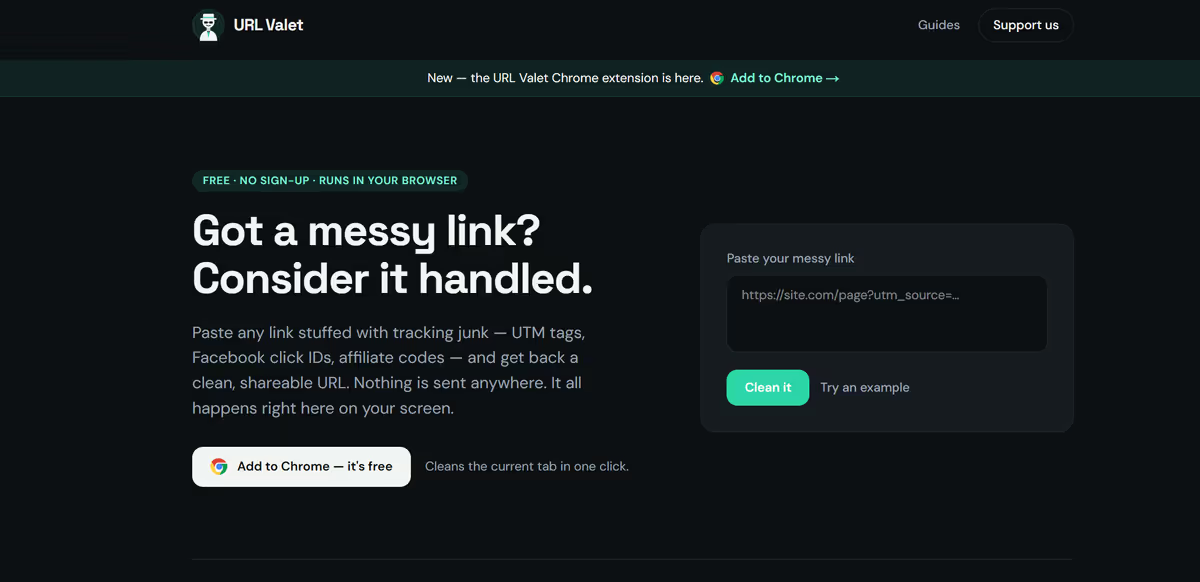
Paste a messy link, get a clean one back. That's the whole thing.
Under the hood it strips the known tracking parameters: the entire utm_ family, Facebook's fbclid, Google's gclid, affiliate tags, email-marketing codes. All while carefully keeping the parts that make a link work. Search terms, page numbers, product IDs and the v= that loads a YouTube video are never touched. If a link is already clean, it tells you and leaves it alone.
Most importantly, it all happens in your browser. Nothing gets sent to a server, logged or stored. There's no account and no sign-up. It's a utility, not a data grab.
Who it's for
I built it for my own itch, but a few groups get the most out of it:
- Privacy-minded people who don't love handing over a tracking trail every time they share something.
- Social media managers and marketers who need to clean raw links before shortening or reposting, especially so someone else's campaign tags don't pollute their own analytics.
- Everyday browser users who just want a short, trustworthy-looking link to paste into a message.
That last group is why I built two versions of it.
Two products, one engine
The plan was a hybrid: a website for people who search for this kind of thing, and a Chrome extension for people who want it one click away in their toolbar.
The web app is the front door. It's also where a bit of writing lives: plain-English guides on what UTM parameters are, how to remove fbclid, and why cleaning links is worth the two seconds. That content does double duty. It's genuinely useful, and it's how the site gets found in search.
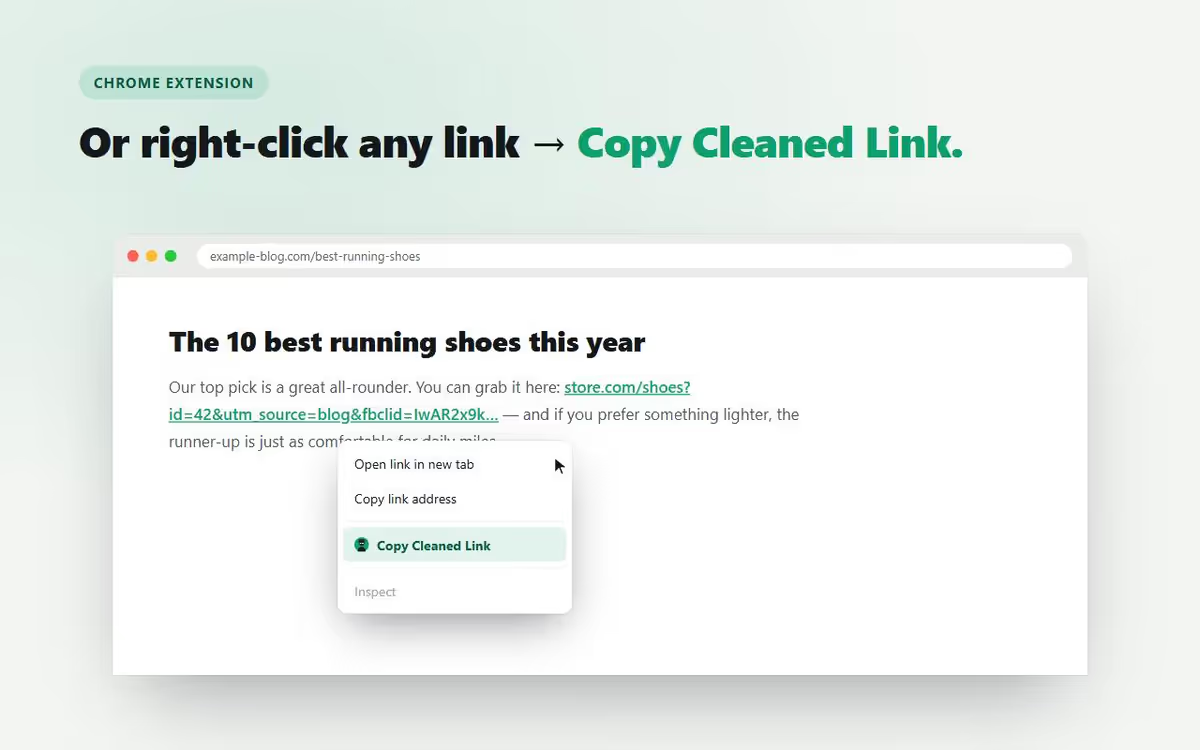
The Chrome extension does the same job without leaving the page you're on. Click the toolbar icon to clean the current tab's link, or right-click any link and pick "Copy cleaned link". Same result, less friction.
The part I'm happiest about is that both share the exact same cleaning logic. One list of what to strip, one list of what to protect, used in two places. So the extension and the website can never disagree about what a "clean" link is.
Where Ship Studio changed the pace
Here's the honest version of how fast this went, because the speed is the actual story.
I started with a strong product requirements document: the working name, the two-product idea, the list of parameters to strip. From there, working inside Ship Studio, I mostly described what I wanted and watched it get built and deployed. A few things stood out:
- No environment fuss. The dev server was already running with a live preview. I never touched a terminal to start or restart anything; I just saw my changes appear as they were made.
- The boring-but-critical stuff was handled. Setting up the repo, wiring the custom domain through Cloudflare, deploying to Vercel with HTTPS, generating a sitemap and robots file for search engines. All of it got done in the flow of the conversation instead of becoming its own afternoon.
- Branding didn't stall the build. I wanted a bit of character: a suited "fixer" mascot, the kind of person you call to make a mess disappear. That got designed and turned into a real icon set for the extension and a favicon for the site, without me opening a design tool.
- It caught its own mistakes. When a long example link overflowed on mobile, it got spotted and fixed on a phone-width preview and redeployed. The kind of small thing that usually sits in a "later" list for weeks.
The result: a live, secure, multi-page site on its own domain, plus a Chrome extension packaged and submitted to the Web Store for review, in a day. If I'd done the plumbing by hand, the domain-and-deploy dance alone would have eaten most of that time.
What actually shipped
- A live web app with the cleaner tool, a set of guides, and a privacy policy.
- A Chrome extension (Manifest V3, minimal permissions) submitted to the Chrome Web Store.
- Both running the same in-browser cleaning engine, with nothing sent to a server.
What's next
The extension is in review, and once it's live I'll wire an "Add to Chrome" button into the site. After that it's the slow, patient work every small product needs: let the site get indexed, see which guides people actually find, and keep the strip and keep lists current as new trackers show up.
Update: the extension is now live and free on the Chrome Web Store.
If you share links, and everyone does, give URL Valet a try. Paste something messy and watch the tracking fall off.
And if you've got a small idea sitting in a notes app because "the setup would take a weekend", this is my nudge: the setup is the part that's gotten cheap. Building URL Valet reminded me that the gap between "I wish this existed" and "here's the link" is a lot shorter than it used to be.